
Hedge Trimming in Berwick
Formal box and camellia hedging, handled by species
Terra Maintenance provides hedge trimming in Berwick VIC 3806 and throughout the Dandenong Ranges and outer south-east Melbourne. Hedge trimming in Berwick is some of the most careful work on our books, because the hedges are old. English box around the Village conservation area, Langmore Lane and the grid north of Wilson Botanic Park has in some cases been growing for forty to fifty years, and camellia hedging is common on the same streets. A cutting mistake on either takes years to correct, and mid-winter is the wrong moment for both, for two completely different reasons.
Your Camellia Hedge Is Flowering. That Is Why We Are Not Cutting It.
Camellia is the most misunderstood plant in a Berwick winter garden, and the blanket advice you will read elsewhere is wrong. Camellias in Victoria are the cool-season flower. That is the whole reason they anchor these gardens through winter. The answer for July depends entirely on which one you have.
Camellia sasanqua flowers from around March through to July. A sasanqua hedge that has finished flowering is at or near its correct pruning window right now, and sasanqua also tolerates heavy renovation better than the others. Camellia japonica and reticulata are the opposite case: japonica peaks from mid-August to mid-September and reticulata through August and September. Cutting either this month removes the display that is about to open. The governing rule from Camellias Victoria is that camellias have one growth spurt a year and it starts immediately after that plant finishes flowering. Prune late and you get diminished regrowth and dead-end stubs. So we identify the plant before we estimate, and if it is a japonica in bud, the honest answer is October.
Box is the other Berwick constant, and it is not a winter job either. Fresh cuts on box are frost-susceptible, and its shaping cycle here runs late October once the spring flush has hardened off, then again in late January before the late-summer push. Two structured cuts a year is what keeps a fifty-year-old formal hedge looking like one.
Conifer hedging on the older blocks carries a rule that overrides season entirely: never cut back past the green into the brown interior, because there are no latent buds in there and the bare patch is permanent.
More on how we work: our hedge trimming service across Melbourne's outer south-east, or everything we do for Berwick properties.
Hedge Trimming in Berwick: Local Conditions and What That Means for Your Property
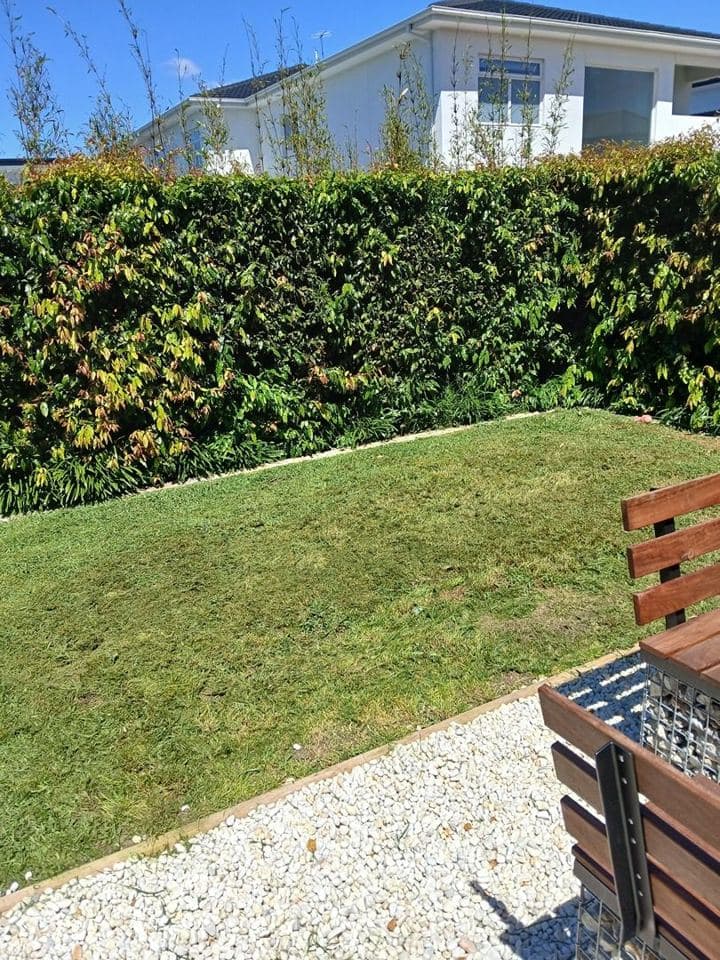
The hedge trimming workload in Berwick is among the heaviest in our service area, and the reason is the age and scale of the formal hedging on the older streets. English buxus on blocks around the Berwick Village conservation area and along streets like Langmore Lane, High Street and the residential grid north of Wilson Botanic Park has been growing in some cases for forty to fifty years, reaching 1.5–2 m in height and substantial width. These hedges are structurally important to the character of individual properties and to the streetscape: they function as boundary definition, noise screens and wind breaks, and owners are generally protective of them. Cutting mistakes (removing too much from one pass, cutting into brown wood on a conifer) can take years to correct, so the work requires discipline and an understanding of species growth habits. Box should be cut at least twice annually in Berwick's climate: once in late October after the spring flush has hardened off, and again in late January before the late-summer growth push. Large-leaved photinia and viburnum tinus hedges on the same streets are somewhat more forgiving but still need two formal cuts and a light tidy between. On the newer estate streets, hedge work shifts to smaller, younger screens of lilly pilly and murraya that are still being trained into shape. The growth rate of murraya in warm seasons means three cuts per year keeps it presentable. Conifer hedges, where they exist on older blocks, need single annual cuts and operators must avoid cutting back past the green zone.
What's Included with Hedge Trimming in Berwick
Every hedge trimming job for a Berwick property includes the following as standard. Tailored to Casey conditions and the unique characteristics of local properties.
- Species identified before the first cut, because box, camellia and conifer all want different timing
- Formal box maintained on a two-cut year: late October after the spring flush hardens, and late January
- Camellia hedging trimmed to its own flowering cycle rather than a calendar date
- Conifer hedging kept inside the live green zone, never cut back into bare wood
- Structural screens on heritage-era blocks reduced in stages rather than a single hard pass
Recent Jobs in Berwick
Hedge Trimming in Berwick: FAQs
Common questions about hedge trimming for Berwick properties.
Should my camellia hedge in Berwick be trimmed now?
When should a formal box hedge in Berwick be cut?
Can an old conifer hedge in Berwick be cut back to reduce its width?
Hedge Trimming in Nearby Suburbs
We provide hedge trimming across the Casey area and beyond.
Other Services Available in Berwick
See all the grounds maintenance services we provide for Berwick properties.
Or view the complete Berwick services overview and the Hedge Trimming service details across Melbourne.
Prefer to talk? Call us about your Berwick property
Speak directly with our team about hedge trimming for your Berwick property.
0457 868 060Monday - Friday, 8am - 4pm