
Winter 2026
Winter Garden and Property Services in Melbourne's South-East
Winter garden and property services across Melbourne's south-east, from Emerald and the Dandenong Ranges out through Belgrave, Monbulk, Berwick, Narre Warren, Officer and Pakenham. Winter is not a quiet season here. Rain peaks between April and October, moss takes hold on shaded paths, gutters keep filling with eucalypt leaf and bark, and half the garden is dormant enough to prune while the other half is about to flower.
Terra Maintenance runs four services through the cold months. Below is what each one covers, what it does not, and whether late July is actually the right time to book it.
Free, no-obligation estimates. Fully insured, $20M public liability.
What winter actually changes on a property here
The two halves of Terra's service area have genuinely different winters. High ground in the Dandenong Ranges receives roughly 35% more rain than Pakenham, and the gap is widest between April and October. Mount Dandenong averages about 1,166mm a year against Pakenham's 865mm, with a July mean overnight minimum of 3.6°C. That is not a severe frost climate by Australian standards, but it is cold enough and damp enough to change three things at once.
Shaded hard surfaces stay wet long enough for moss, lichen and algae to hold on. Gutters in the hills keep loading up year round from eucalypt leaf, shed bark and gum nuts rather than emptying out after one autumn drop. And the cold slows wound recovery on anything you cut, which is why the pruning answer below is a list of two halves rather than a season.
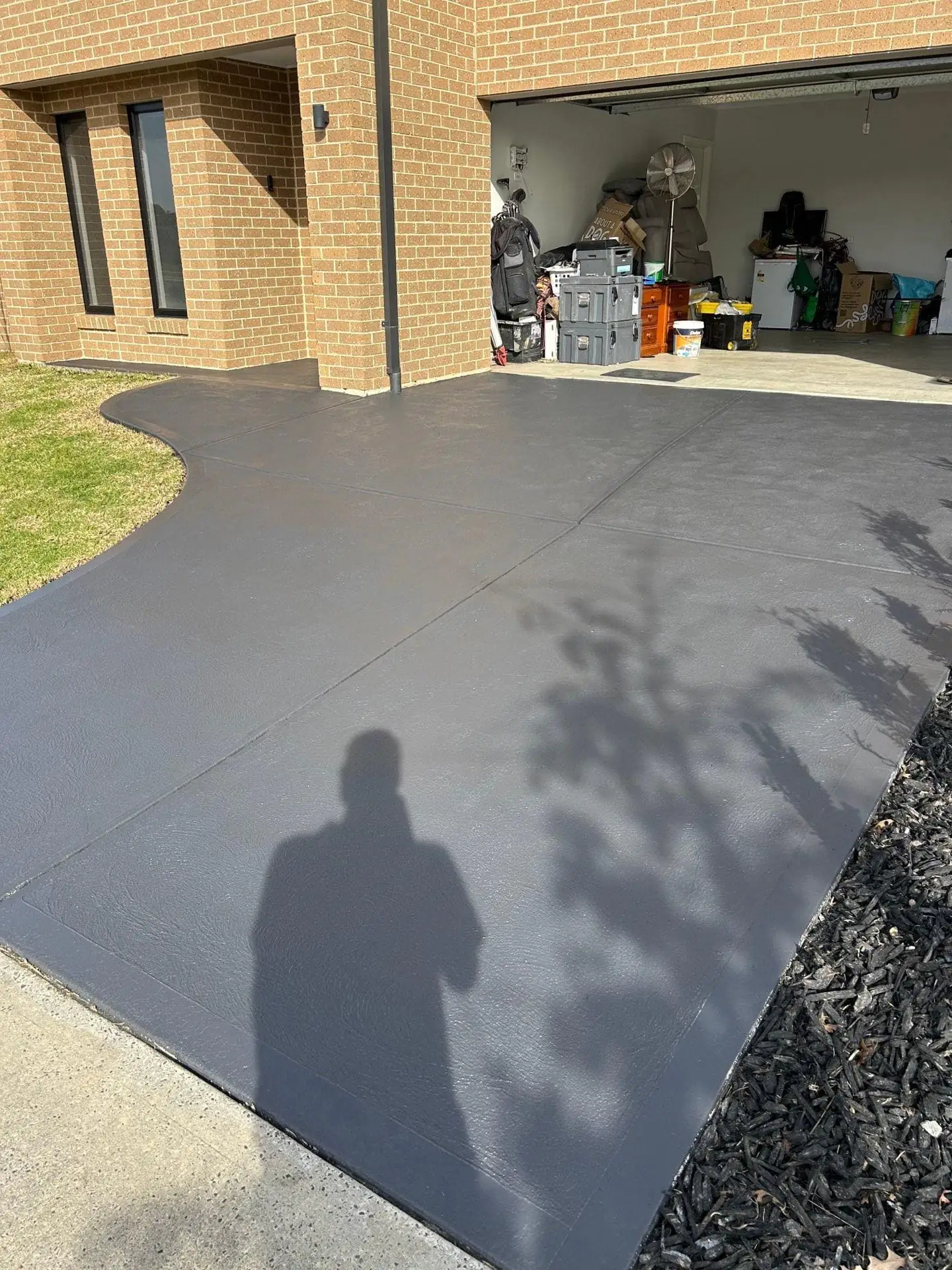
Pressure washing: driveways, paths and patios
Moss, lichen and algae grow fastest in exactly the conditions this region gets from April to October: steady rain, low light and cool air. On a shaded concrete driveway, a brick path under a canopy or a set of steps that never sees direct sun, that growth is a slip hazard as much as a presentation problem.
The honest part: winter washing is weather-dependent. The surface needs a dry enough window to be cleaned and to dry off afterwards, and frost complicates both. We book around the forecast rather than washing in the rain, and spring and autumn stay the easiest months to schedule. What winter has going for it is that this is when the problem is at its worst and easiest to see.
Scope. Concrete, exposed aggregate, brick and paver driveways, paths, patios and steps. Sealing available once a surface is clean and dry. We do not clean windows, roofs or solar panels.
Hard and green waste removal
Which council you sit under decides whether paying anyone for waste removal makes sense this winter, and we would rather say that up front than put an estimate in front of you for something the council will take for free.
- Yarra Ranges (Belgrave, Selby, Monbulk, Olinda, Sassafras, Tecoma, Ferny Creek, Macclesfield). One collection per property per year, scheduled by area rather than booked on request, with a long gap between rounds. We will not publish a date we cannot verify, so confirm the current schedule with Yarra Ranges. If you have a pile now and your area's round has been through, there is no free council collection to wait for.
- Cardinia (Emerald, Cockatoo, Gembrook, Avonsleigh, Mount Burnett, Beaconsfield, Officer, Pakenham). Free bookable hard rubbish collections, with an entitlement that resets on a set cycle. Worth using before paying anyone. Call us for the parts of a clear-out they will not take.
- Casey (Berwick, Narre Warren, Harkaway, Guys Hill, Doveton). Free bookable collections, with item size and weight limits, and no construction material such as concrete, rubble, bricks or soil.
Green bins are the other catch. Cardinia's food and garden waste service covers kerbside-serviced residential properties only, so Green Wedge and Rural Conservation blocks have no green bin at all. Put that together with a single Yarra Ranges hard rubbish round a year that cannot be brought forward, and a large rural block in the hills has very little free capacity to move green waste through winter.
Burning off is not a winter workaround. Restrictions apply across this region and they vary by shire, by zone and by time of year, on top of the fire danger period. Do not assume it is permitted on your property. Check the current rules with your own council first, and note that a permitted burn generally still has to be registered before it is lit.
Council collection dates, entitlements and burning rules all change. Confirm the current position with your council before planning around it.
Scope. Green waste from a clear-out or a pruning job loaded and taken to licensed recycling, plus general hard waste from a garden tidy-up. We do not take soil, rubble, bricks or building material.
Gutter cleaning
The best single window for gutters in Victoria is late April to mid-May, after the deciduous leaf drop and before the winter rain sets in. Late July is past it. We will say so rather than pretend otherwise.
Two things still make it a July job:
- Gutters visibly overflowing or spilling down a wall right now. That is not going to improve before spring.
- Booking the spring clean ahead of fire season, which is the one that matters most in the hills.
What fills a gutter also differs across the service area. In the corridor estates it is a sharp autumn pulse from planted deciduous street trees. In the hills it is eucalypt leaf, shed bark ribbons and gum nuts all year with peaks after wind, on top of the autumn drop from the liquidambars, oaks, maples and birches in older gardens. Hills properties generally need clearing more often than the standard twice a year for that reason.
Scope. Gutters and downpipes cleared by hand from safe ladder access, debris taken off site, and a note on anything visible that needs a roof plumber. We do not carry out roof or plumbing repairs.
Winter pruning, hedges and overgrowth
Winter is the right time for part of the garden and exactly the wrong time for the rest of it. In the Dandenong Ranges the split runs against the plants the region is best known for, which is why a generic “winter is pruning season” page gives locally wrong advice here.
Right for late July
- Apples, pears and nashi. Dormant, and this is the standard window.
- Repeat-flowering roses. The Rose Society of Victoria puts the window at June or July, not before July in most areas, and early August in really cold districts. Higher in the hills, late July into early August.
- Hydrangeas. Each stem back to the fattest pair of buds, old woody growth out at the base.
- Deciduous ornamentals such as oak, liquidambar and ornamental pear. Easiest to shape while the structure is visible.
- Dead, damaged or hazardous wood on anything. Any species, any season.
Leave until later
- Rhododendrons and azaleas. The buds for the October and November display are already set. Cutting now removes the season.
- Deciduous magnolias. Close to flowering on bare wood, and they bleed sap heavily if cut in late winter.
- Maples and birches. Heavy sap bleeders. Wait until they are fully in leaf.
- Apricots and cherries. Cool wet weather is how bacterial canker gets into a fresh cut. Late summer to early autumn instead. Peaches, nectarines and plums take light work only, in genuinely dry weather.
- Camellias, depending on species. In Victoria the sasanquas flower from March through July, so a hedge that has finished is at or near its window. Japonicas and reticulatas peak in August and September, so cutting them now takes the display that is about to open. If in doubt, wait until yours has finished flowering.
Hedges
Winter is for a light tidy that holds shape through the slow season, and for a late-winter hard renovation on the species that take one, such as lilly pilly or a sasanqua camellia that has finished flowering. The main structural trim on box, murraya, pittosporum, viburnum and escallonia belongs in spring, summer or autumn. Fresh cuts on box in particular are frost-susceptible and slow to recover.
Conifer hedges (leylandii, cypress, thuja) can be shaped, but never cut back past the green into the brown wood. There are no latent buds in there and the bare patch does not fill in.
One more winter thing worth knowing: a box hedge turning orange or bronze in winter is a normal response to cold and bright winter sun, not a disease.
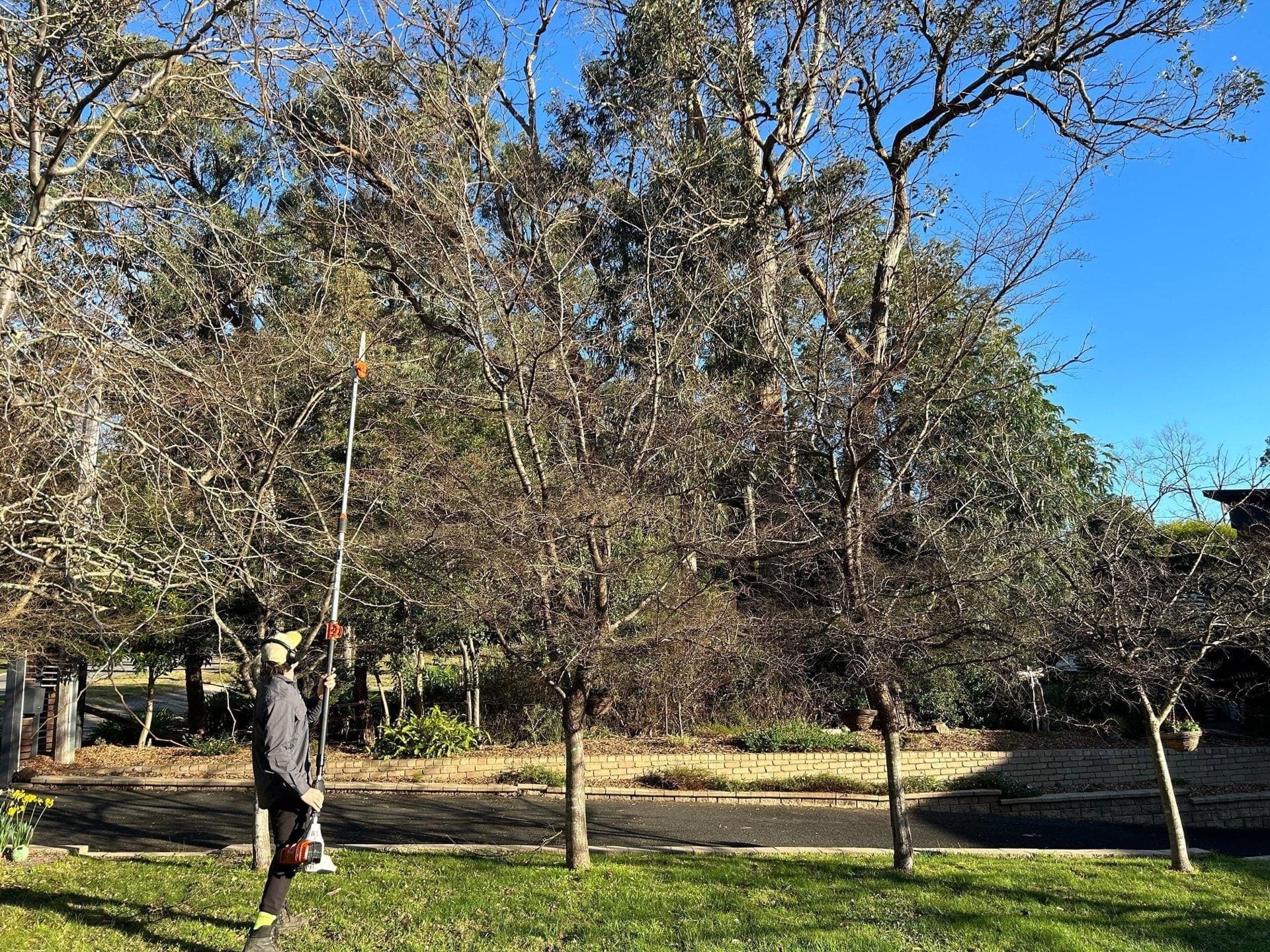
Scope. Pruning, shaping, hedge reduction and overgrowth clearing within safe reach, carried out to AS 4373, with climbing, elevated work platform access and full felling carried out in-house by our own crew. Green waste is chipped on site or taken away, and dense woody regrowth or established blackberry goes to our partner Ruggedscapes. Stump grinding is arranged through trusted specialist partners.
Winter questions we get asked
Is winter a good time to prune in the Dandenong Ranges?
For part of the garden, yes. Apples and pears are dormant, repeat-flowering roses are in their window through July into early August, hydrangeas are ready, and deciduous ornamentals such as oak, liquidambar and ornamental pear are easiest to shape while the structure is visible. For the plants the hills are best known for, no. Rhododendrons and azaleas have already set the buds for their October and November display, and deciduous magnolias are close to flowering on bare wood and bleed sap heavily if cut in late winter. Camellias depend on the species: sasanquas flower from March through July and a finished hedge is at its window, while japonicas and reticulatas peak in August and September and should be left alone until they finish. Dead, damaged or hazardous wood can come off anything, in any season.
Can a driveway be pressure washed in winter?
Yes, on a dry enough day. Moss, lichen and algae grow fastest in the cool, damp, low-light conditions between April and October, so winter is when a shaded driveway or path is at its most slippery and most worth cleaning. Winter washing is weather-dependent work: the surface needs a dry window to be cleaned and to dry off afterwards, and frost complicates both. We schedule around the forecast rather than washing in the rain. Spring and autumn remain the easiest months to book.
When is the next hard rubbish collection in the Yarra Ranges?
Yarra Ranges runs one collection per property per year, scheduled by area rather than booked on request. Because there is only one round and you cannot bring it forward, there is a long stretch of the year with no council collection to wait for. We will not publish a date we cannot verify, so check the current schedule with Yarra Ranges rather than planning around a date you read here. That makes the hills the part of our service area with the least free capacity to move waste right now. Cardinia and Casey both offer free bookable collections instead, so if you are in either of those it is worth using your entitlement before paying anyone. Burning off is not a reliable alternative: restrictions vary by shire, zone and time of year, so check the current rules with your own council rather than assuming. Council collection dates and rules change, so confirm yours before planning around them.
Is late July too late to clean gutters?
It is past the best window. The standard Victorian advice is twice a year, and the strongest single slot is late April to mid-May, after the deciduous leaf drop and before the winter rain sets in. Two reasons still make it a July job: gutters that are visibly overflowing now, which will not improve before spring, and booking the spring clean ahead of fire season. Properties in the hills usually need clearing more often than twice a year, because eucalypt leaf, shed bark and gum nuts fall all year rather than in one autumn pulse.
Which suburbs do you cover for winter services?
Everything within about 45 minutes of Emerald. That covers the hills through Belgrave, Selby, Monbulk, Olinda, Sassafras, Tecoma, Ferny Creek, Macclesfield, Cockatoo, Gembrook and Avonsleigh, and the corridor through Beaconsfield, Officer, Pakenham, Berwick, Narre Warren, Harkaway and Guys Hill. We work with residential, commercial and strata properties.
Do you charge for an estimate?
No. Estimates are free and there is no obligation. We assess the property, put the scope of works in writing and issue an itemised estimate, which may be adjusted on the day if conditions on site differ from what was assessed.
Get a winter estimate
Tell us which of the four you need and roughly what the property looks like. We come out, put the scope of works in writing and issue an itemised estimate. Free, and no obligation.
Winter services across the Dandenong Ranges and the Casey and Cardinia corridor, including Emerald, Belgrave, Monbulk, Cockatoo, Beaconsfield, Berwick and Pakenham. See the full service list or contact us.